



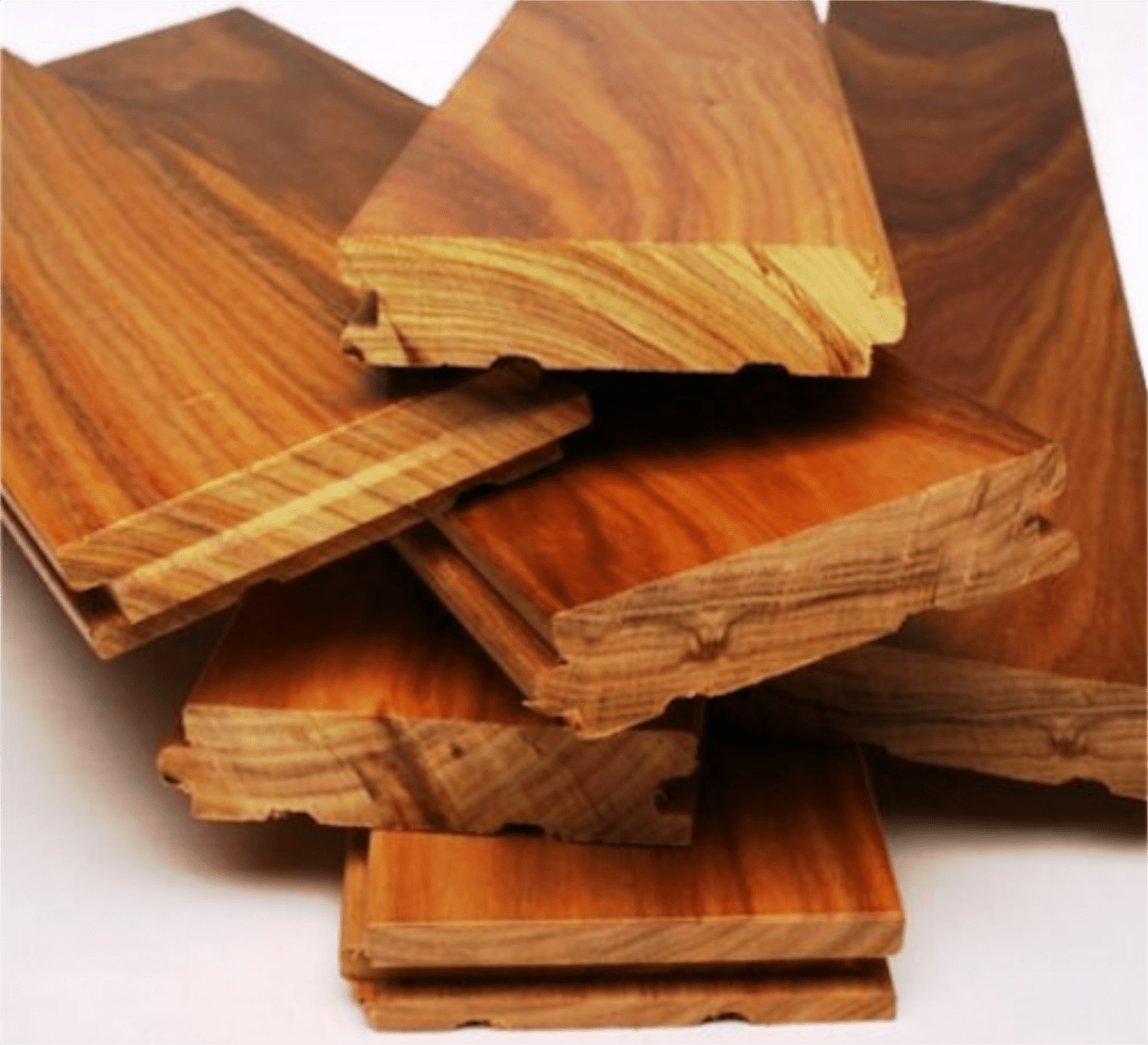

Each wood species has specific properties and character. Under certain conditions, such as changing humidity, it can therefore “move”. This affects the dimensional stability of the product, but has no effect on its durability.
You may notice the following in the wood:
Joints, knots and burls
Growth rings, joints and knots are part of the character of the wood. Knots and burls in the trunk are caused by the tree’s side branches. The number and type of knots depend on the species. Growth rings tell you something about the age of the tree.
Tip! Loose knots or burls can always be re-fixed with wood glue.
Expansion, shrinkage and cracking
Moisture or dryness causes changes in volume, so wood can expand or shrink, which can lead to small cracks. The higher the durability class, the smaller the drying cracks. Wood movement only occurs in damp conditions or when wood dries unevenly.
Tip! Let the wood “breathe” by taking it out of its packaging in good time before use, and do not leave it in full sun.
Colour differences / weathering to grey
During treatment (impregnation), various colour pigments are introduced into the wood. Depending on the wood and storage, these pigments come to the surface. These colour differences slowly disappear under the influence of sunlight. Over time, even treated wood becomes lighter and weathers to grey under the influence of ultraviolet light. The greying of wood is a slow process.
Mould (white spots)
Surface mould spots in wood can occur when wet parts are stacked closely together for some time, which can happen during production and transport.
Tip! Mould is easy to remove with a cleaning product (for example vinegar or bleach) or a special mould remover. It will also disappear over time through the weather.
White and green spots (salt stains)
On treated timber, it can look as if salt is forming on the surface of the wood. These white and greenish discolourations arise from the combination of preservative and resin. These spots disappear by themselves.
Tip! Easy to remove with a damp cloth.
Resin
A tree produces resin to protect itself against viruses and infections. This is a natural phenomenon and the amount of resin can vary greatly from tree to tree. Once resin has hardened, it is easy to remove. On pine, green speckles are usually present because resin mixes with the preservative.
Tip! Green speckles are easy to remove with a brush. Any drops of resin can be carefully scraped off or removed with turpentine.
Bleeding
Tropical hardwood in particular can leak fluids, which are sometimes rust-coloured. These substances are harmless but can stain underlying work or mix with the paint applied. This so-called “bleeding” stops by itself over time.
Tip! Only work with well-dried wood. Preferably apply two turpentine-based primer coats with a drying time of 24 hours. Still stains? They disappear over time with the rain or with the help of bleach.
Heartwood and sapwood
A tree contains sapwood and heartwood. The heartwood provides strength, while the sapwood transports nutrients. In some species, such as pine and Douglas fir, the sapwood is lighter in colour. Structural timber partly consists of sapwood; small sections such as battens and boards may contain more sapwood. Sapwood is naturally less durable.


